
Curriculum
Learning to the Full
Our aim at Emmanuel is that children learn to the full. By this we mean that children develop in courage, curiosity and creativity, stimulated by rich topics. We aim that every child pursues learning, not for external rewards, but for the love of learning itself. We aim that every child tastes and sees that the purpose of learning is the capacity it gives us to serve others wisely and well.
Our library is a central space within the school where children learn to love stories. We know that children don’t just hunger for facts but are shaped by living ideas about people and places, both real and fictional. Regular trips to the library each week encourage children not just to learn to read but to love reading.
Our curriculum is broad and deep, creatively meeting and exceeding national standards. We explore curriculum through termly topics, chosen to fire children’s imagination through rich content. Our gifted staff team teach a wide range of subjects: English, Maths, Science, History, Geography, Technology, IT, Latin, Music, Sport and Chess.
Learning extends beyond the classroom through our after school clubs. We offer a wide range of clubs including hockey, netball, tennis, cricket, choir, typing, carpentry, nature, lego and card making. Families can request individual instrumental lessons for children on a range of instruments including piano, violin, clarinet and cello.
Media Library
Maths for Life
History at Emmanuel
Friday Afternoon Fun
Books at Emmanuel
Chess
Life at Emmanuel
August 2019 | The Quest for Goodness in Action
A favourite assembly song from my childhood was ‘When a knight won his spurs’. I’m not sure I understood many of the words but it probably resonated because at some point in childhood, the idea of a knight going on a noble quest for a righteous cause captures the imagination of children.
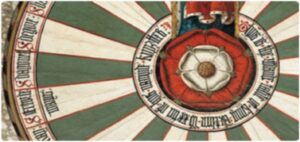 As an adult, the world of knights becomes a bit murkier. Arthur and his Knights of the Round Table seem to embody such a noble ideal until we scratch below the surface and discover they are deeply flawed. Initially Lancelot appears to be the hero of the group until his illicit choices bring down the whole fellowship.
Our local area, including the De Vere hotel in Sandford, has buildings originally used by the Knights Templar. Temple Cowley (and its shopping centre, Templars Square) takes its name from them. Our dressing up box in Early Years contains the classic red cross with white background which was the Knights Templar’s uniform. The Templars are now shrouded in legend after their abrupt dissolution at the beginning of the 14th century.
But it is not just mystery, intrigue and romanticism which makes knights so fascinating. Behind their organised structure was a commitment to a higher ideal. The motto of the Templars was ‘Not to us but to your name be the glory, God’, expressing the opening words of Psalm 115. Elsewhere in the Old Testament, God fleshes out this motto in practice: ‘He has shown you, O man, what is good. And what does the Lord require of you? To act justly, to love mercy, and to walk humbly with your God’.
So for the last four weeks of term we’ll explore the knights of the past, their virtues and flaws, and consider what ‘acting justly, loving mercy and walking humbly with our God’ looks like today. And as our term of topics draws to a close and we reach Christmas, we’ll celebrate with a medieval Christmas feast and rejoice in the ‘Son of Righteousness’ who brings light and life through his humility:
Mild He lays His glory by,
Born that man no more may die;
Born to raise the sons of earth,
Born to give them second birth
Hark! the herald angels sing,
“Glory to the newborn King”
August 2019 | The Quest for Truth in Story
Once upon a time there was a hero who found himself in a world of deep injustice. Despite great opposition from the prince of the realm, he fought for what was right and good and overcame the forces which fleeced the poor and furnished the rich. The hero encouraged his men to wait for the day when the king would return and ensure that justice was always done and peace would reign forever.
Once upon a time there was a hero. He went away from home to fight in a war and for a number of years battled against the elements of nature and nymphs to get home. Once home he dealt with his enemies who had ransacked his kingdom and was revealed and reunited with those he loved.
Whether it’s Robin Hood or Odysseus, Hercules or Beowulf, our cultures are filled with stories of heroes, kings, challenges, opposition, conquests and fulfilment. Our cultures are filled with these themes because they give voice to our questions about truth and justice, questions about who we are, questions about hurt and suffering, questions about purpose: both the purpose of history and our lives in it. All cultures seek answers to how a broken world can be made whole and the type of hero who is needed to make that happen.
Herman Bavnick, a Dutch theologian speaks about how across cultures, the longings stories express are pointing to a longing to which Christ provides the answer:
The good philosophical thoughts and ethical precepts found scattered through the world find in Christ their unity and centre. They stand for the desire which in Christ finds its satisfaction; they represent the question to which Christ gives the answer; they are the idea of which Christ furnishes the reality.
Every story ever told poses questions and tries to provide answers. JRR Tolkein’s essay, ‘On Fairy Tales’ explores how every fairy story has an escape from a danger such as hunger, poverty, sorrow, injustice and especially death. He illustrates how each fairy has a miraculous ‘turn’ when the tide is pushed back, and our heart is lifted with joy. Tolkein sees in this ‘turn’ an echoing of the Creator’s heart, who through the birth, death and resurrection of Christ, brought into our reality a story which has all the elements of a classic fairy tale but all the hallmarks of truth. In this way, he argues, the gospel hasn’t taken away the need for legends, it has ‘hallowed’ them, making them a place where, despite some of their misinterpretations of reality, we hear shadows of the greatest story ever told: of a hero who left his home to fight for his people; of a hero who took on the prince who had usurped the throne; of a hero who, having his power concealed, overcame those who believed him powerless and insignificant; of a hero who delivered those oppressed by sin, sorrow and death; of a hero who will one day fulfil all the hopes of those who are waiting for him.
So next term we’ll study Robin Hood, Arthur, The Odyssey and Beowulf. We’ll visit Wayland’s Smithy and the Uffington White Horse, and in these stories enjoy all the shards of light they shed which point us to the true light who gives light to everyone, who entered our world and made truth known.
August 2019 | The Quest for Beauty in Creation
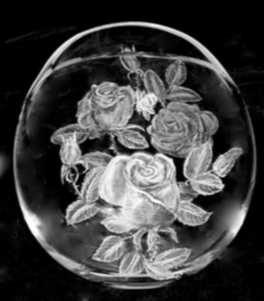
“My intention is to create on glass designs that not only are pleasing to the eye and accurate in what they portray, but also reflect in some way the care and attention to detail of the Creator, as observed in the world around us.”
We had two initial responses to Philip’s work: amazement about how accurately they portrayed nature but delight in how beautiful the pieces were because they were so like nature. Often when we declare a work of art as beautiful, we do so because it mirrors or echoes the beauty God has set in creation.
 For the first four weeks of next term we have chosen to explore beauty in nature, particularly by observing the life and work of the bee. While a buzzing bee can make us run in panic, when they are carefully observed they are full of beauty. This summer we sent children home with a ‘Bee Detective Chart’ with 10 different bees to look for. But in total there are over 20,000 species of bees in the world: some with red tails, some with white; some which are purple, some which are green; some who live in colonies, many who live alone; some with a queen, others self governing.
But God’s care and attention to detail are not just seen in observing a single bee, but in seeing how bees work together to create and sustain their local community and in so doing, contribute to global ecology. That an animal smaller than a thumb nail and who lives for only six weeks can make wax, honey and food fit for queens, while flying the distance of Oxford to Edinburgh and visiting over 100,000 flowers is remarkable. One bee produces one twelfth of a teaspoon of honey in its lifetime but contributes to every third teaspoon of food we eat by its pollination of many of the plants we need to survive.
So we are looking forward to learning more about flowers, honey, bees and much more in the first four weeks of term. But the beauty and complexity of the bees point beyond themselves to the wisdom of our creator, who made not just bees but many millions of creatures. As the Psalmist says:
How many are your works, LORD! In wisdom you made them all; the earth is full of your creatures.
July 2019 | How We Choose Our Topics at Emmanuel
Thou hast set my feet in a large room; should be the glad cry of every intelligent soul. Life should be all living, and not merely a tedious passing of time; not all doing or all feeling or all thinking––the strain would be too great––but, all living; that is to say, we should be in touch wherever we go, whatever we hear, whatever we see, with some manner of vital interest.
Some people have asked me: who writes the curriculum at Emmanuel? The answer is that all the teaching staff at Emmanuel contribute to it. In Autumn 2017 I explained to the staff that the next term’s topic would be ‘Discoveries’. I gave out post-it sized pieces of paper and asked staff to write down all the different discoveries it would be good to introduce children to. And then we sorted them into categories and found cross connections. And by the time we finished we had sorted discoveries into four topics: the seas, skies, lands and under the earth.
Once those categories were set, we asked: what would be a really interesting story which would help children understand more about the seas? And this year we chose Shackleton’s Journey as through it we learnt about boats, the Antarctic, penguins, triumph and disaster, survival, the history of the era and many other wonderful things. Similarly, we chose a book entitled, ‘Town is by the Sea’ to consider mining and how it affects a whole community. Sometimes we choose things we don’t know lots about yet because learning is often richest when we are learning alongside children rather than simply repeating what we’ve done before. So next year we’ll travel across the sea on the Cutty Sark, across lands on the Orient Express and explore the space race which led to putting a man on the moon.
The principle undergirding the way we work is to choose topics which are rich and multifaceted and can be explored through a number of disciplines. Our topics are built around ‘living ideas’ rather than bland propositions. The technical word in the trade is ‘generative topics’ which contain an intrinsic energy through the stories they tell and the worlds that they enable us to enter.
The purpose in designing our curriculum in this way is articulated in the quote from Charlotte Mason above. We want children to be viscerally in touch with all that they are learning about, deeply curious about its different elements and to see its relevance without us having to spell it out. We want children at Emmanuel to have a sense of joy in exploring the world God has made, both in all that they can discover personally and what they can see vicariously through the explorations and adventures of others. It is striking to me that I have never heard a child at Emmanuel say, ‘What’s the point of this?’ and many times I have heard them delight in what an amazing world their feet have been set in. Joyful wonder is one of the visible fruits of a curriculum shaped by trust in a God who richly provides us with everything for our enjoyment.
July 2019 | The Quest for Truth, Beauty and Goodness
Each Autumn term we have a theme for our term’s work which develops the disposition of curiosity. In 2017 we became detectives, in 2018 we followed footprints and in 2019 we are going on quests. But we’re not simply becoming knights on a peculiar mission, we are seeking out realities which Christians through the ages have held as important: truth, beauty and goodness.
Our school song speaks about ‘beauty, truth and goodness flowing from Emmanuel, God with us’, reflecting our conviction that ultimate beauty, truth and goodness are found in God revealed in Christ. Because they are realities found in God they are realities that we were all made for.
So this term we are going for a quest for beauty in creation, looking at a tiny creature of great beauty and worth in the world, the bee. We’ll be going for a quest for truth in stories, recognising that the stories every culture tells are an expression of a longing for deeper realities. We’ll be going on a quest for goodness in action, looking at the knights of old and the values that spurred them to action, and modern day ‘knights’, pursuing truth and justice in a world which is not yet as it should be.
 Because although we were made for truth, beauty and goodness, we don’t always pursue it. We pursue happiness and in so doing, choose a truth, beauty or goodness that we hope will lead us there, but we don’t naturally seek truth, beauty and goodness as God defines it. So we’ll end our term of quests with the Christmas story, where God came down in Christ and revealed truth in history, beauty incarnate and goodness in action.
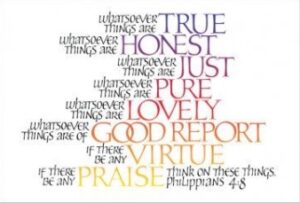
Paul in the Bible doesn’t use the words ‘truth, beauty and goodness’ but he describes the Christian faith which the Philippians have learned, received and heard from him as true, honorable, just, pure, lovely, commendable, excellent and worthy of praise. Our prayer is that as we seek truth, beauty and goodness this coming term, we might find more deeply how all these treasures of wisdom and knowledge are given to us through Christ.